
Udaipur, Rajasthan
Udaipur, the City of Lakes.
Lakes held by the Aravalli hills, palaces at the water’s edge and old lanes made for walking. Udaipur is where 9th Estate offers its stays, homes and spaces.
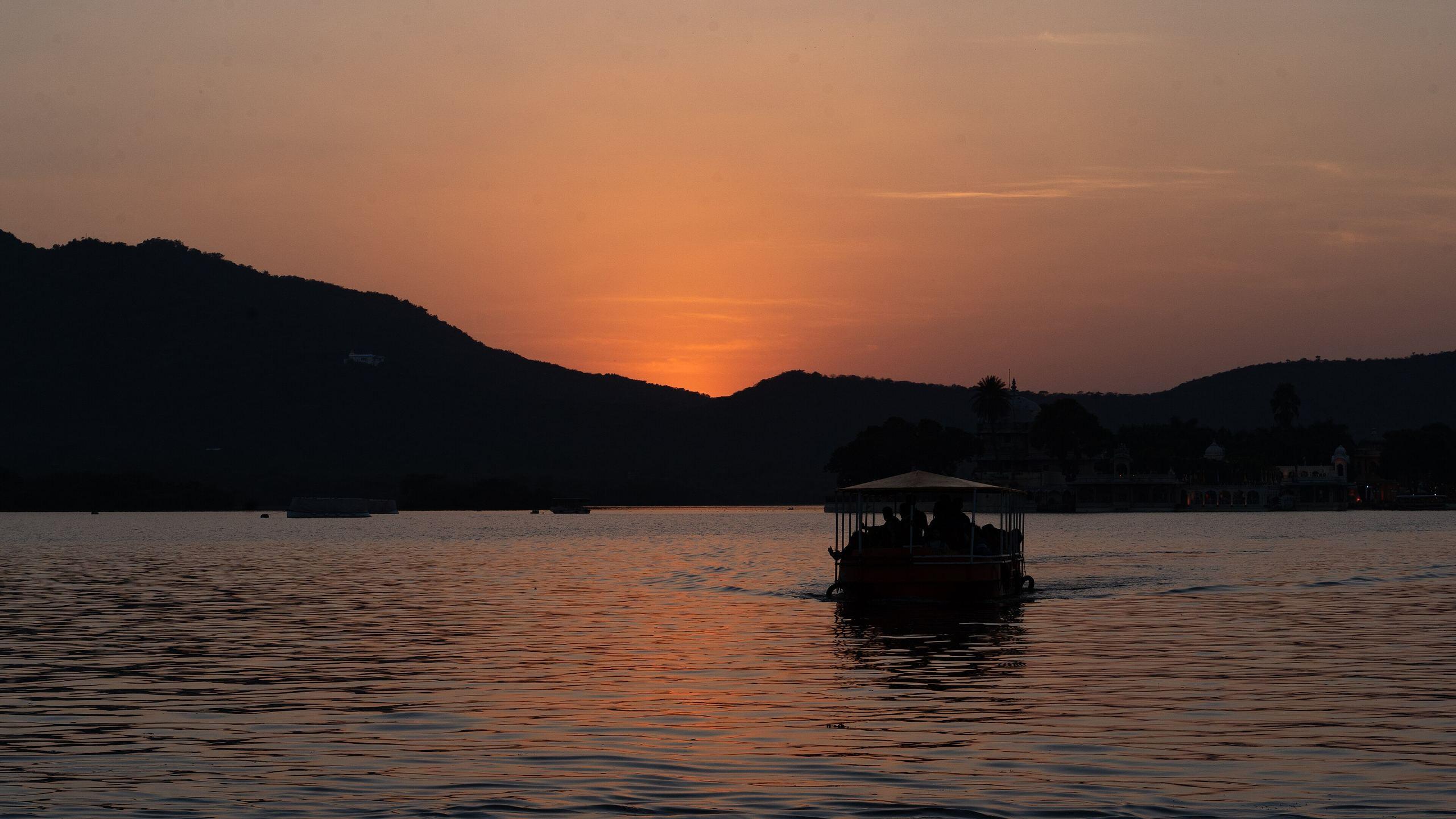
The story
A city built around water.
Udaipur was founded in the 16th century by Maharana Udai Singh II of Mewar. Here is how a city came to be built around a lake, a few of the places that tell its story, and where we come in.
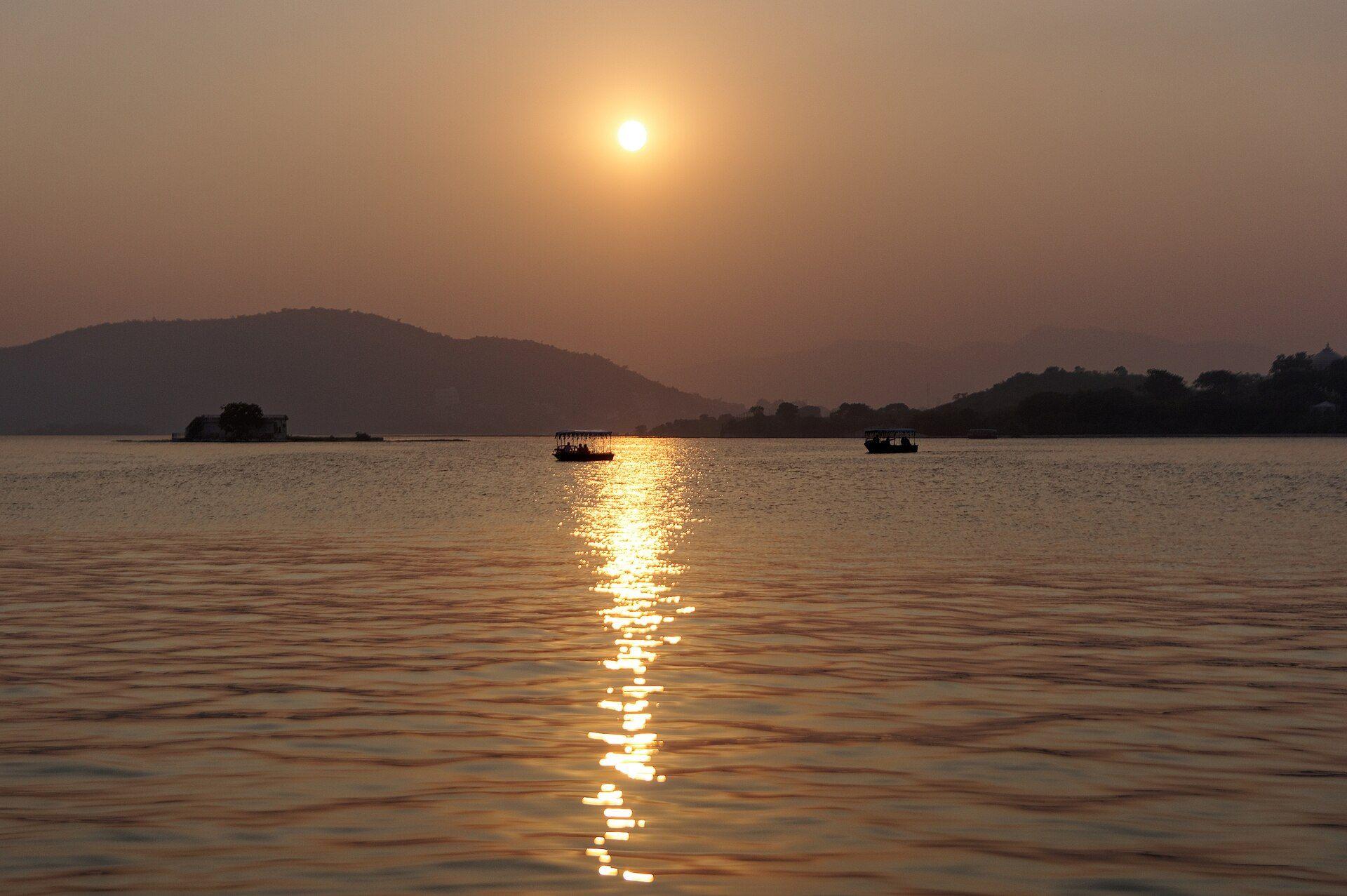
Sun on Lake Pichola, with the hills beyond.Photo: Jakub Hałun, CC BY-SA 4.0 Before the city
A lake in a valley of hills.
Water came first. Lake Pichola is older than Udaipur: by tradition a grain trader of the Banjara community built the first dam here, in the 14th or 15th century, and the lake is named for a nearby village, Picholi. The Aravalli hills rise all around it.
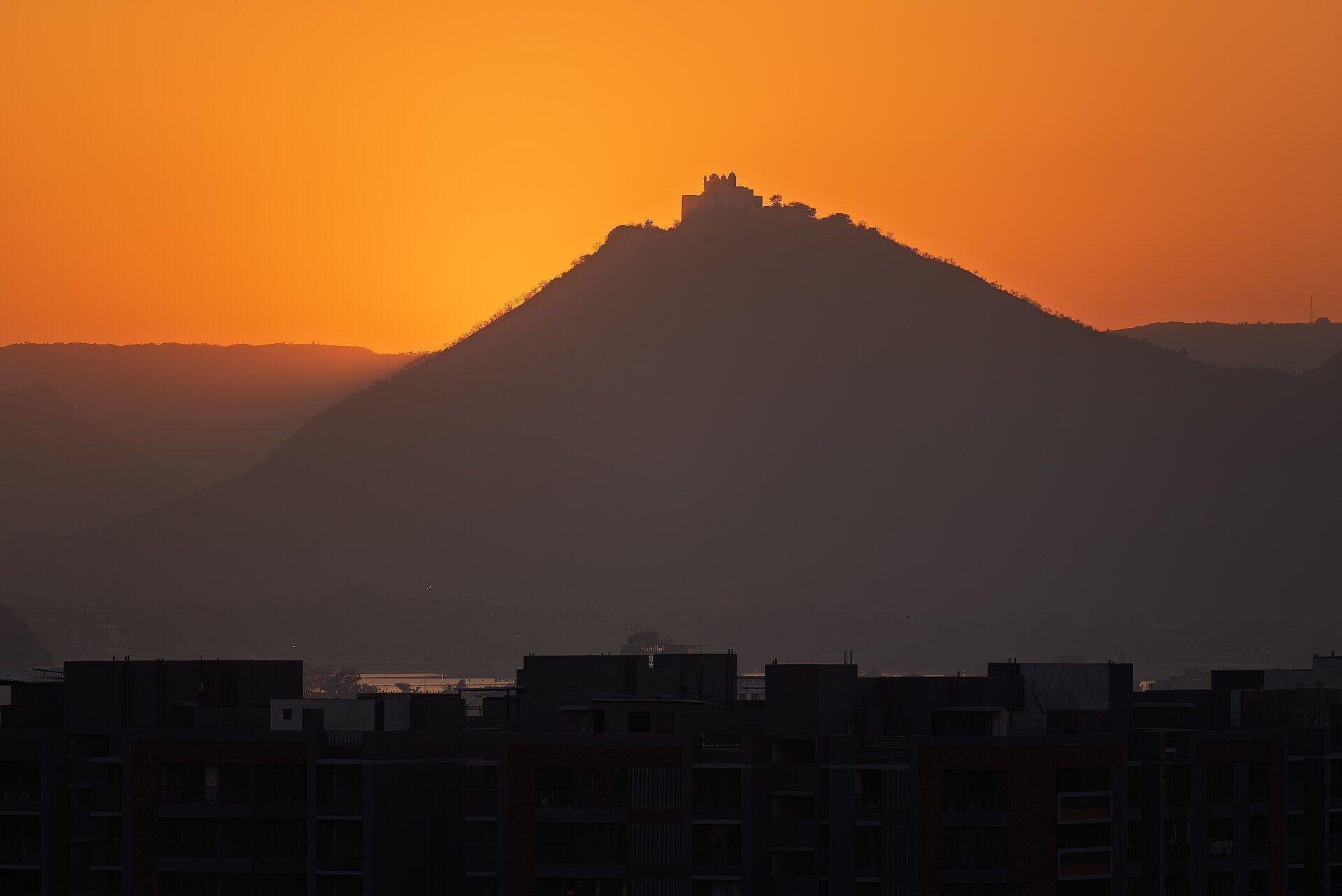
Sajjangarh on its hill above the city.Photo: Mustang Joe, CC0 The mid-16th century
A city founded in the hills.
In the middle of the 16th century, Maharana Udai Singh II of Mewar chose this valley for a new capital, sheltered by forest, lake and hill. Local tradition says a hermit in the hills advised him to build here. He enlarged the lake with a stone dam, and the city grew along its shore.
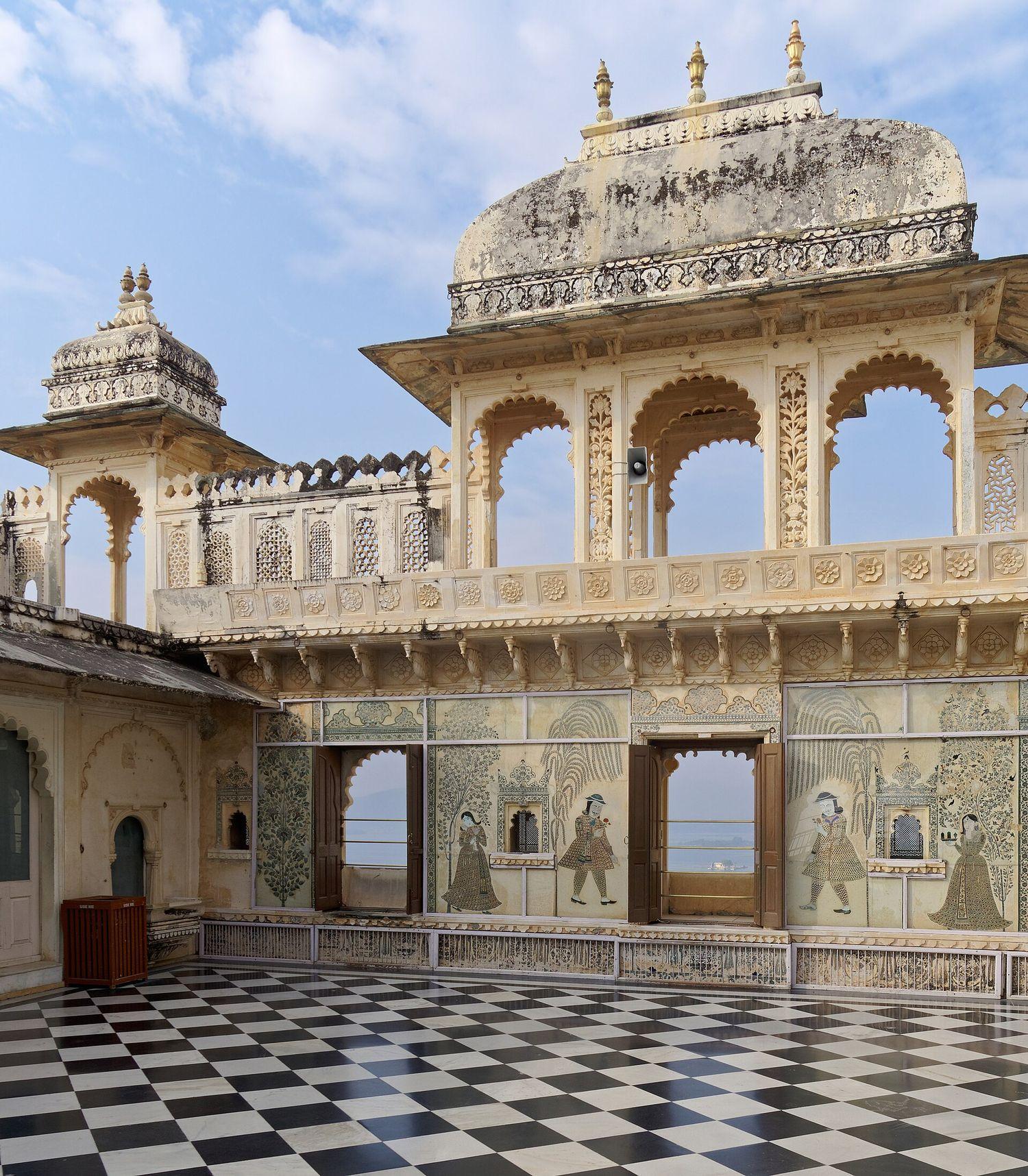
A courtyard of the City Palace, with a pavilion of scalloped arches.Photo: Jakub Hałun, CC BY-SA 4.0 Nearly four centuries
A palace that kept growing.
The City Palace stands on the east bank of Lake Pichola. It was not built in one go: successive Maharanas added to it for nearly four centuries, which is why it reads as a cluster of palaces, courtyards and balconies rather than one building. Part of it is now a museum.
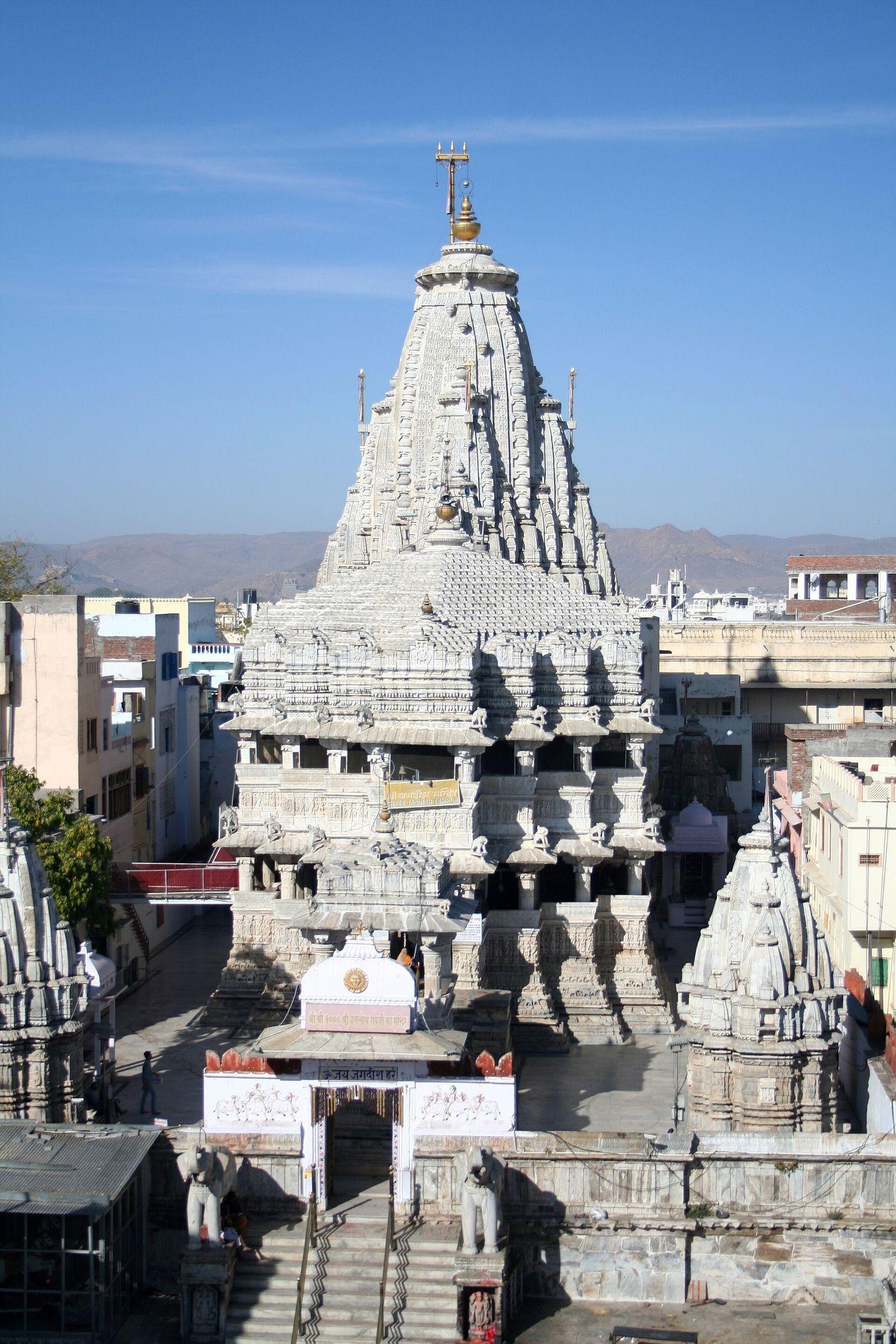
Jagdish Temple, built in 1651.Photo: Ingo Mehling, CC BY-SA 3.0 The 17th and 18th centuries
Ghats, temples and havelis.
The old city filled in around the palace. Jagdish Temple, dedicated to Vishnu, was built in 1651 by Maharana Jagat Singh I. Down at Gangaur Ghat on the lake, Bagore Ki Haveli was built in the 18th century by Amar Chand Badwa, a prime minister of Mewar, and is now a museum.
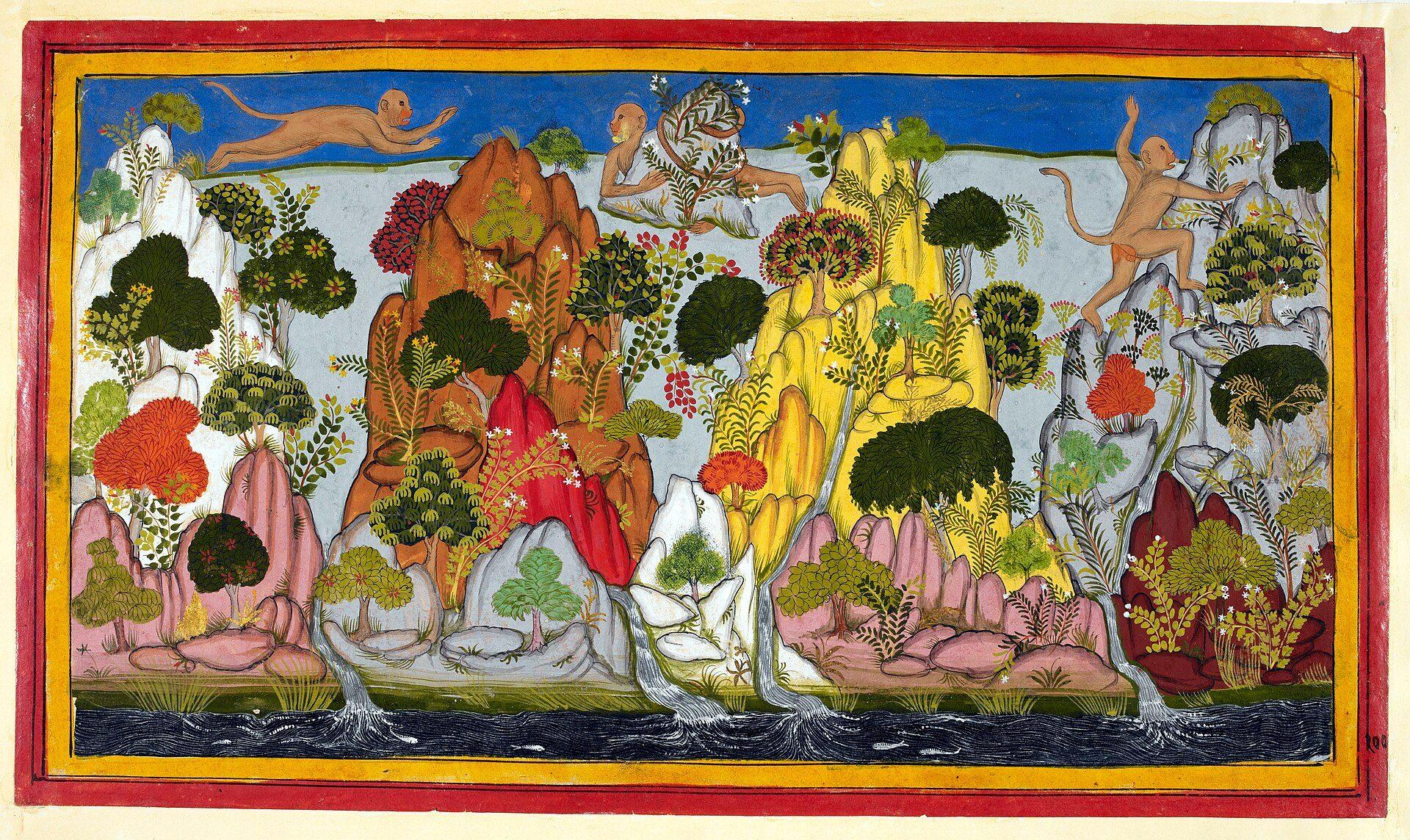
Hanuman flies to the Himalayas for healing herbs: a page of the Mewar Ramayana, painted at Udaipur by Sahibdin in 1652.Painting: Sahibdin, Public domain From the 1600s
Painters and makers.
In the 17th century the court at Udaipur became a centre of miniature painting. The Mewar school’s small, richly coloured paintings recorded epics, music and court life, and the tradition is still practised in the city. A day trip away, Nathdwara is known for Pichwai, large painted cloths made for the temple of Shrinathji.
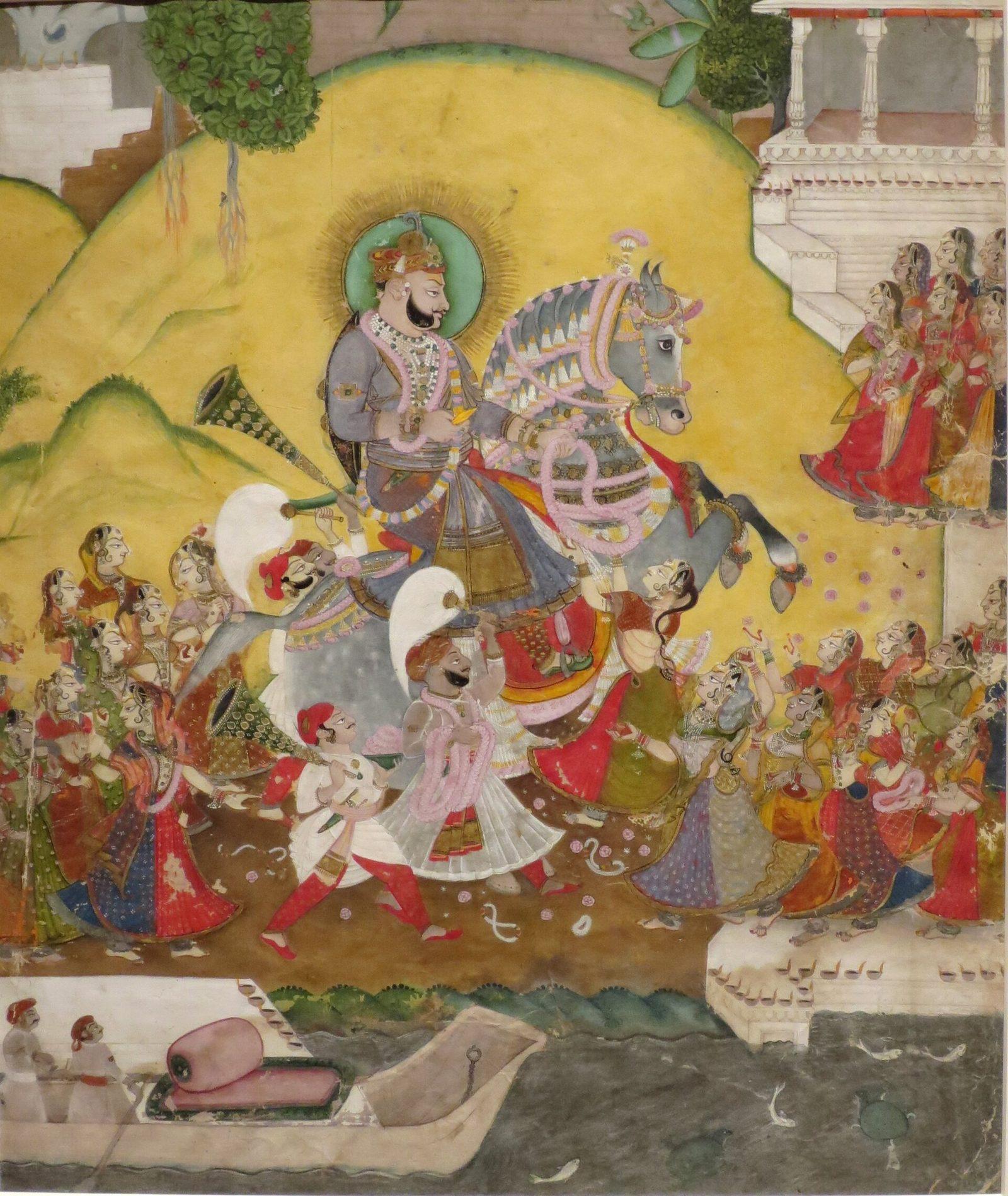
A court watercolour of Gangaur at Udaipur, dated 1810.Painting: Unknown artist (Honolulu Museum of Art), Public domain Every spring
A city of festivals.
Each spring, usually in March or April, Udaipur celebrates the Mewar Festival around Gangaur. Women carry images of Gauri and Isar in procession to Gangaur Ghat on Lake Pichola, with folk music and dance along the way.
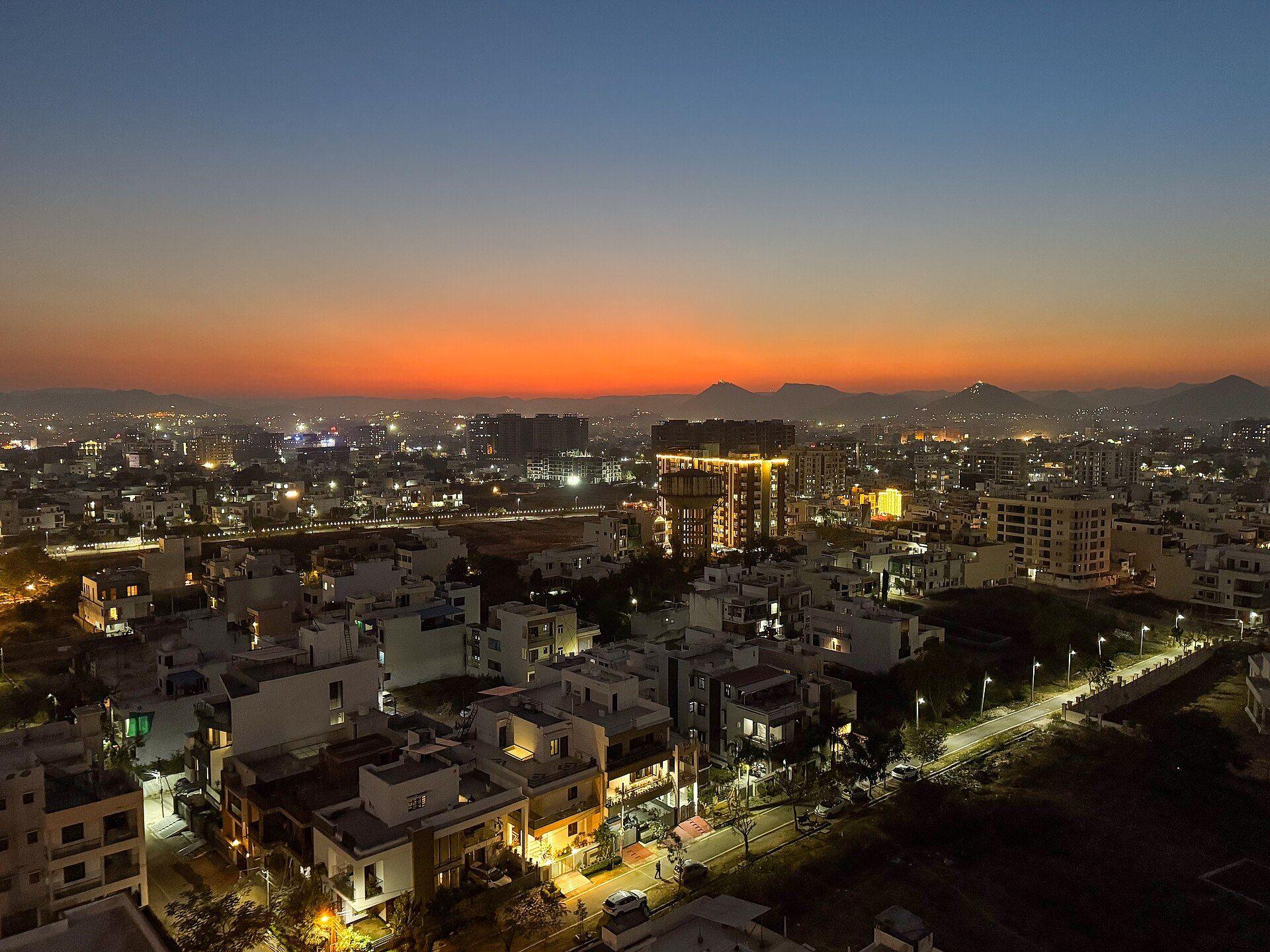
Udaipur’s rooftops at dusk.Photo: Mustang Joe, CC0 Today
A living city.
Some of Udaipur’s palaces are museums and some are hotels, and the lakes are still where people gather at the end of the day. It is also a working city, with homes, offices and shops running through the old lanes and out along the new roads. That is the Udaipur 9th Estate is made for: places to stay, to live and to do business.
Histories of Udaipur do not always agree on dates, so where they differ we give the century or the decade. To read more: Udaipur, History of Udaipur, City Palace, Udaipur, Lake Pichola, Udaipur on Incredible India.
At a glance
Udaipur in brief.
- Where
- Southern Rajasthan, India, in the Mewar region
- Known as
- The City of Lakes
- Founded
- In the mid-16th century, by Maharana Udai Singh II
- Landmarks
- City Palace, Lake Pichola, Fateh Sagar, Sajjangarh
- Best months
- October to March
- Getting here
- Maharana Pratap Airport (UDR), Udaipur City railway station and the road network
The seasons
Cooler months
October to March
Clear skies and the most pleasant weather of the year, with cooler evenings. The main travel season, and the best time for the lakes and the old city on foot.
Hot months
April to June
Hot and dry, and quieter. Mornings and evenings are when the city comes out.
Monsoon
July to September
The hills turn green and the lakes fill. Showers, softer light and fewer visitors. Sajjangarh, the Monsoon Palace, was begun in the 1880s as a place to watch the clouds roll in.
Beyond the city
Within a day’s reach.
Udaipur is a good base. These are all possible as day trips from the city.
- Kumbhalgarh
- Ranakpur
- Nathdwara
- Eklingji
- Haldighati
- Chittorgarh
Questions
About Udaipur.
Where is Udaipur?
Udaipur is a city in southern Rajasthan, India, in the Mewar region. It is set among the Aravalli hills around a chain of lakes, which is why it is known as the City of Lakes.
When is the best time to visit Udaipur?
October to March is the main season, with clear, pleasant weather. July to September, the monsoon, turns the hills green and fills the lakes. April to June is hot and dry.
How do I get to Udaipur?
Udaipur is served by Maharana Pratap Airport (UDR) and Udaipur City railway station, and is connected by road to the rest of Rajasthan and to neighbouring states.
What is there to do in and around Udaipur?
In the city: the City Palace, Lake Pichola, Fateh Sagar and the old lanes. Within a day trip: Kumbhalgarh, Ranakpur, Nathdwara, Eklingji, Haldighati and Chittorgarh.
What does 9th Estate offer in Udaipur?
9th Estate offers Stays (holiday homes, holiday rentals and hostels), Living (serviced apartments and long-term rentals) and Properties (property leasing and commercial spaces).
Talk to us.We will be expecting you.
Tell us what you are looking for in Udaipur: a stay, a home or a space for business.